nursing head-to-toe assessment pdf
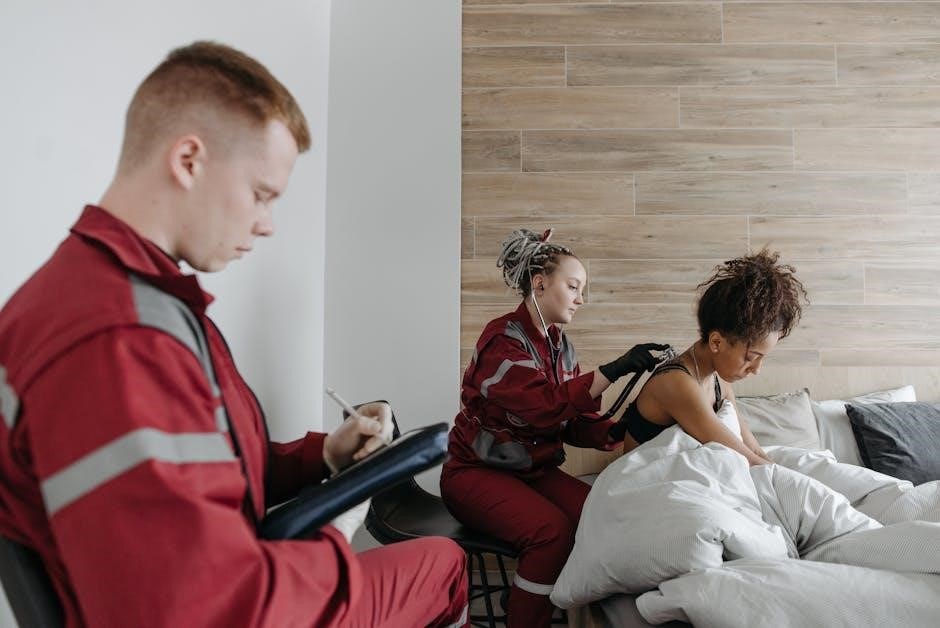
Head-to-toe assessments are fundamental to nursing, offering a systematic framework for evaluating a patient’s health and prioritizing clinical needs, often aided by a PDF checklist.
Purpose and Importance of a Systematic Approach
A systematic head-to-toe assessment, often facilitated by a nursing checklist (like a PDF version), maximizes patient comfort and clinical efficiency. Organization is key, preventing unnecessary position changes and ensuring a thorough examination. This approach acts as a roadmap, enabling nurses to identify priorities and deliver comprehensive, safe patient care. Utilizing a standardized method minimizes omissions and promotes consistency in evaluating a patient’s overall health status, leading to better outcomes.
Benefits of Using a Nursing Head-to-Toe Assessment Checklist
Employing a standardized nursing head-to-toe assessment checklist, frequently available as a PDF, ensures consistency, accuracy, and efficiency in practice. These checklists guide entry-level nurses and students, promoting a systematic approach. They minimize the risk of overlooked details and facilitate comprehensive documentation. A checklist adapts to lifespan considerations and supports focused assessments for abnormal findings, ultimately enhancing patient safety and care quality;
Preparing for the Assessment
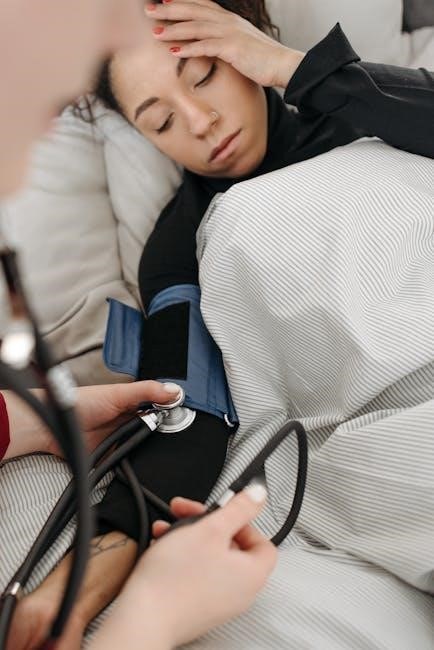
Prior to beginning, organization is key for patient comfort and clinical efficiency, often utilizing a PDF head-to-toe assessment guide for streamlined care.
Ensuring Patient Privacy and Comfort
Establishing a therapeutic environment is paramount before initiating a head-to-toe assessment. Always introduce yourself and explain the procedure to the patient, obtaining their consent.
Maintain patient dignity by providing a private space, utilizing curtains or closing doors. Ensure the patient is positioned comfortably and warmly, offering assistance with adjustments as needed.
A PDF checklist can help maintain focus, but never at the expense of compassionate care; address any patient concerns or anxieties throughout the process.
Gathering Necessary Equipment
Prior to commencing the head-to-toe assessment, assemble all required tools to streamline the process and minimize interruptions. Essential equipment includes a stethoscope, thermometer, pulse oximeter, blood pressure cuff, and penlight.
Having a PDF checklist readily available ensures no step is overlooked.
Additional items may be needed based on the patient’s condition, such as a reflex hammer or visual acuity chart. Ensure all equipment is clean and functioning correctly before use.
Head Assessment
A thorough head assessment involves examining the scalp, hair, skull, face, eyes, ears, nose, mouth, and throat, guided by a PDF checklist.
Scalp, Hair, and Skull Examination
Begin by inspecting the scalp for lesions, tenderness, or any signs of trauma, referencing a nursing head-to-toe assessment PDF for guidance. Palpate the scalp to assess for masses or unusual textures. Evaluate hair distribution, texture, and density, noting any hair loss patterns.
Carefully palpate the skull for any deformities, tenderness, or crepitus. Assess for any signs of head trauma or underlying skull fractures. Document all findings accurately on the standardized assessment form, ensuring a comprehensive record of the patient’s condition.
Facial Symmetry and Nerve Function
Assess facial symmetry by observing the patient’s features at rest and during movement, utilizing a nursing head-to-toe assessment PDF as a reference. Check for drooping of the face, uneven eyebrows, or difficulty closing eyes. Test nerve function by asking the patient to smile, frown, and puff out their cheeks.
Evaluate the patient’s ability to detect light touch on both sides of their face. Document any asymmetry or deficits in nerve function accurately, noting the specific cranial nerves affected, for a complete patient profile.
Eyes: Visual Acuity and Pupillary Response
When performing an eye assessment, guided by a nursing head-to-toe assessment PDF, begin by assessing visual acuity using a Snellen chart, if available. Evaluate pupillary response to light and accommodation – noting size, shape, and reaction time. Observe for PERRLA (Pupils Equal, Round, Reactive to Light and Accommodation);
Inspect the conjunctiva and sclera for any abnormalities. Document any deficits in visual fields or pupillary response, as these findings can indicate neurological issues or other health concerns.
Ears: Hearing and External Structure
Utilizing a nursing head-to-toe assessment PDF, begin the ear assessment by inspecting the external structures for symmetry, lesions, or tenderness. Palpate the auricle and mastoid process for any abnormalities. Assess hearing by whispering a test, observing the patient’s response to sounds in each ear.
Document any cerumen buildup, discharge, or signs of infection. Note any reported tinnitus or hearing loss, as these findings require further investigation.
Nose and Sinuses: Patency and Mucosa
When performing a nursing head-to-toe assessment, referencing a PDF checklist ensures thoroughness. Assess nasal patency by gently occluding one nostril at a time, asking the patient to sniff. Inspect the nasal mucosa for color, swelling, or discharge. Palpate the sinuses for tenderness, indicating potential inflammation.
Document any epistaxis, congestion, or reports of sinus pain, as these warrant further evaluation.
Mouth and Throat: Oral Hygiene and Swallowing
Utilizing a nursing head-to-toe assessment PDF checklist guides a systematic oral examination. Inspect the oral mucosa for lesions, inflammation, or dryness. Assess teeth and gums for hygiene and any signs of disease. Evaluate the patient’s ability to swallow, noting any difficulty or pain.
Document observations regarding hydration status and any reported dysphagia, crucial for preventing aspiration.
Neck Assessment
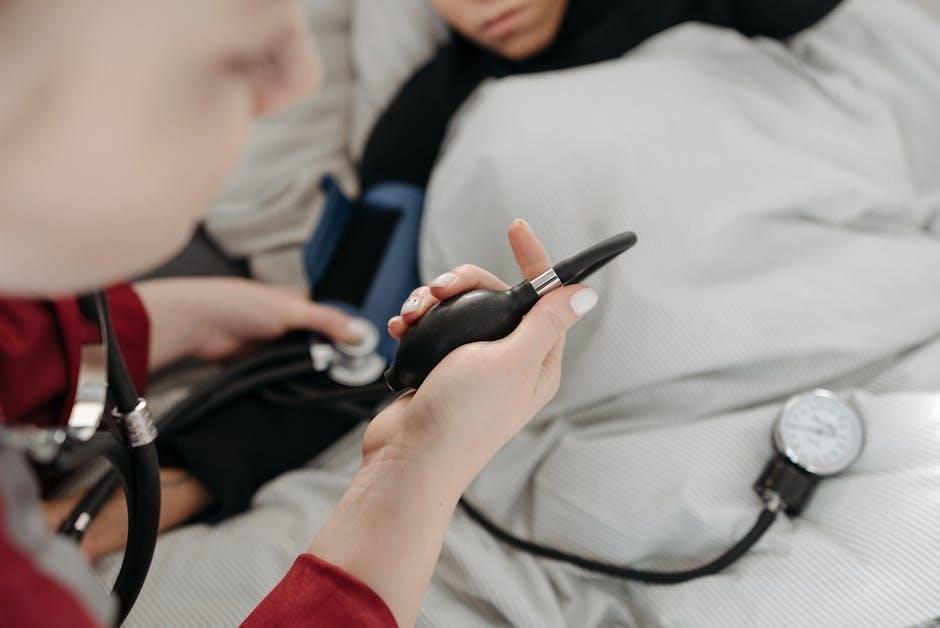
A nursing head-to-toe assessment PDF includes palpating lymph nodes and evaluating the neck’s range of motion for any abnormalities or stiffness.
Lymph Node Palpation
During a nursing head-to-toe assessment, as detailed in a comprehensive PDF guide, lymph node palpation is crucial. Systematically assess the cervical, supraclavicular, axillary, and inguinal nodes. Note any enlargement, tenderness, or firmness. Document the location, size, and consistency of any palpable nodes, as these findings can indicate infection, inflammation, or malignancy. Proper technique involves gentle, circular motions, comparing both sides for symmetry and documenting any deviations from normal.
Range of Motion
A thorough nursing head-to-toe assessment, often guided by a detailed PDF checklist, includes evaluating range of motion (ROM) in all major joints. Assess active and passive ROM, noting any limitations, pain, or crepitus. Observe the patient’s ability to perform flexion, extension, abduction, adduction, and rotation. Document any deficits, as restricted ROM can indicate musculoskeletal issues, neurological impairments, or post-operative complications, contributing to a complete patient profile.

Upper Extremity Assessment
The upper extremities are inspected and palpated during a nursing head-to-toe assessment, often utilizing a PDF checklist, to evaluate muscle strength and reflexes.
Inspection and Palpation of Arms and Hands
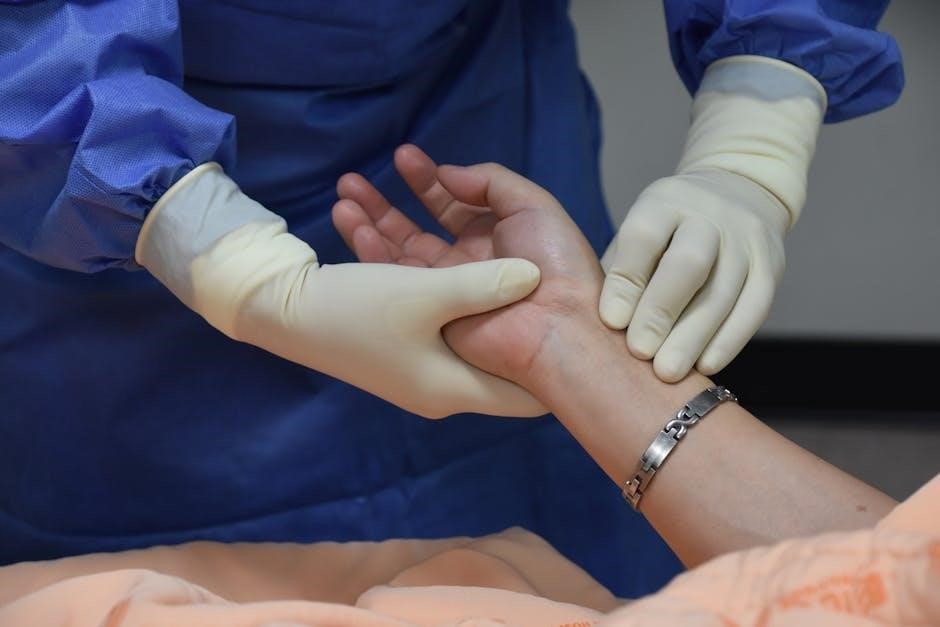
During the upper extremity assessment, careful inspection and palpation of the arms and hands are crucial components, often guided by a comprehensive nursing head-to-toe assessment PDF checklist. Observe for symmetry, skin color, and any visible abnormalities like edema, lesions, or deformities.
Palpate the radial and brachial pulses, noting their strength and equality. Assess muscle tone and tenderness along the arms. Examine the hands for clubbing, cyanosis, and capillary refill, documenting any findings accurately on the checklist for a complete patient evaluation.
Muscle Strength and Reflexes
Evaluating muscle strength and reflexes in the upper extremities is a vital part of the nursing head-to-toe assessment, frequently supported by a detailed PDF checklist. Assess strength by asking the patient to perform specific movements, grading resistance on a 0-5 scale.
Test deep tendon reflexes – biceps, brachioradialis, and triceps – documenting the response as absent, diminished, normal, or hyperactive. Accurate recording of these neurological findings on the checklist contributes to a comprehensive neurological picture.
Capillary Refill
Assessing capillary refill is a quick, non-invasive component of the upper extremity assessment, often included within a comprehensive nursing head-to-toe assessment PDF checklist. Apply pressure to a nail bed until it blanches, then release.
Normal refill time is less than 3 seconds, indicating adequate peripheral perfusion. Prolonged refill may suggest hypovolemia, vasoconstriction, or decreased cardiac output; document any abnormalities clearly on the checklist for timely intervention.
Cardiovascular Assessment
A cardiovascular assessment, detailed in a nursing head-to-toe assessment PDF, includes auscultation of heart sounds and palpation of peripheral pulses.
Auscultation of Heart Sounds
During auscultation, a crucial component detailed within a comprehensive nursing head-to-toe assessment PDF, the nurse systematically listens to heart sounds using a stethoscope. Identifying S1 and S2 sounds is paramount, alongside detecting any extra heart sounds like murmurs, clicks, or rubs.
These abnormal sounds can indicate valvular issues or other cardiac abnormalities. Accurate documentation, guided by the PDF checklist, is essential for communicating findings to the healthcare team and ensuring appropriate patient care. Proper technique and understanding of normal versus abnormal sounds are vital.
Peripheral Pulses
Assessing peripheral pulses – radial, brachial, dorsalis pedis, and posterior tibial – is a key step in the nursing head-to-toe assessment, often guided by a detailed PDF checklist. Palpate and grade pulse strength (0-4+) bilaterally, noting any discrepancies.
Weak or absent pulses can indicate compromised circulation, while bounding pulses may suggest hypervolemia or other issues. Accurate documentation, as prompted by the PDF, is crucial for tracking changes and informing clinical decisions regarding patient perfusion.

Respiratory Assessment
Lung auscultation, respiratory rate, and effort are vital components of the nursing head-to-toe assessment, often streamlined with a comprehensive PDF checklist.
Lung Auscultation
During lung auscultation, the nurse systematically listens to breath sounds across the patient’s chest, both anteriorly and posteriorly, noting any adventitious sounds like wheezes, crackles, or rhonchi. A standardized nursing head-to-toe assessment PDF checklist ensures this crucial step isn’t overlooked.
Documenting the characteristics of breath sounds – pitch, intensity, and duration – is essential. Abnormal findings warrant further investigation and contribute to a comprehensive respiratory assessment, guided by the checklist’s structure.
Respiratory Rate and Effort
Assessing respiratory rate and effort involves observing the patient’s breathing pattern, noting depth, rhythm, and any signs of labored breathing, such as nasal flaring or accessory muscle use. A detailed nursing head-to-toe assessment PDF checklist prompts inclusion of these observations.
Documenting these findings accurately is vital, as changes can indicate respiratory distress. The checklist ensures a systematic approach, supporting early detection and intervention for compromised respiratory function.
Abdominal Assessment
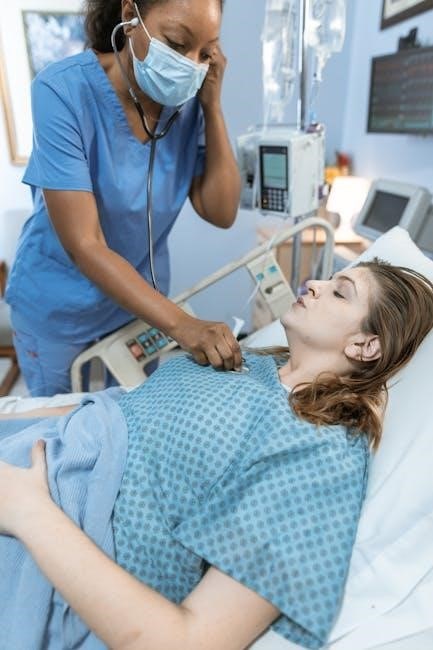
A thorough abdominal assessment, guided by a nursing head-to-toe assessment PDF, includes inspection, auscultation, percussion, and palpation to evaluate bowel sounds and tenderness.
Inspection, Auscultation, Percussion, and Palpation
The abdominal assessment utilizes a four-quadrant approach, beginning with inspection for contour, symmetry, and visible pulsations, often referenced in a nursing head-to-toe assessment PDF. Auscultation precedes palpation to detect bowel sounds in each quadrant, noting any abnormalities. Percussion helps identify organ size and detect fluid or masses. Finally, gentle palpation assesses for tenderness, guarding, and organomegaly, ensuring a systematic and comprehensive evaluation documented within the patient’s chart.
Bowel Sounds
Auscultation for bowel sounds is a crucial component of the abdominal assessment, frequently detailed within a nursing head-to-toe assessment PDF. Nurses listen in all four quadrants, documenting the presence, absence, frequency, and character of sounds. Normal sounds are clicks and gurgles; absence requires further investigation. Hyperactive or hypoactive sounds indicate potential issues, guiding further assessment and informing appropriate interventions, all meticulously charted for continuity of care.
Lower Extremity Assessment
The lower extremity assessment, often detailed in a nursing head-to-toe assessment PDF, includes inspection for edema, neurological checks, and palpation of pulses.
Inspection and Palpation of Legs and Feet
During the lower extremity examination, detailed within a comprehensive nursing head-to-toe assessment PDF, begin with visual inspection for symmetry, skin color, and any visible abnormalities like lesions or edema.
Palpate the legs and feet to assess temperature, muscle tone, and tenderness. Evaluate peripheral pulses – dorsalis pedis and posterior tibial – noting their strength. Check for pitting edema by applying firm pressure; documentation of findings is crucial for patient care.
Edema Assessment
A crucial component of the lower extremity assessment, detailed in a nursing head-to-toe assessment PDF, is evaluating for edema. Assess bilaterally, noting location and extent.
Perform pitting edema assessment by applying firm, but not excessive, pressure for several seconds. Grade edema based on depth of indentation (1+ to 4+). Document the presence, degree, and location of any edema, as it can indicate various underlying conditions requiring intervention.
Neurological Assessment of Lower Extremities
The nursing head-to-toe assessment PDF guides evaluating lower extremity neurological function. Assess strength by testing bilateral dorsiflexion, plantarflexion, and toe curls, documenting findings.
Check for sensation to light touch in each foot and leg, noting any deficits. Evaluate deep tendon reflexes (DTRs) at the patellar and Achilles tendons, grading responses as 2+, 3+, or absent. Document any asymmetry or abnormalities promptly.

Neurological Assessment
A nursing head-to-toe assessment PDF includes evaluating a patient’s level of consciousness and orientation to person, place, and time.
Level of Consciousness
Assessing the level of consciousness is a critical component detailed within a comprehensive nursing head-to-toe assessment PDF. This evaluation determines the patient’s awareness of self and environment, utilizing scales like the Glasgow Coma Scale. Nurses observe responses to stimuli – verbal, pain, and touch – documenting alertness, lethargy, stupor, or coma. Changes in consciousness necessitate immediate investigation, potentially indicating neurological deterioration or adverse reactions to medications, ensuring prompt intervention and improved patient outcomes.
Orientation
Orientation, a key element within a detailed nursing head-to-toe assessment PDF, assesses a patient’s awareness of time, place, person, and situation. Nurses ask simple questions to gauge understanding, noting any confusion or disorientation. This assessment helps establish a baseline and monitor for changes indicative of neurological issues, delirium, or dementia. Accurate documentation of orientation status guides care planning and ensures patient safety, particularly regarding fall prevention and medication adherence.
Skin Assessment
A thorough skin assessment, detailed in a nursing head-to-toe assessment PDF, evaluates skin integrity, turgor, and identifies potential pressure ulcer risks.
Skin Integrity and Turgor
Evaluating skin integrity and turgor is a crucial component of the nursing head-to-toe assessment, often guided by a comprehensive PDF checklist. Assess for lesions, redness, or breaks in the skin, noting size and location. Turgor, assessed by gently pinching the skin, indicates hydration status; delayed recoil suggests dehydration. Document any abnormalities meticulously, as these findings can signal underlying health issues or potential pressure ulcer development. Consistent skin assessments, as outlined in standardized forms, contribute to proactive patient care and improved outcomes.
Pressure Ulcer Risk Assessment
A vital part of the nursing head-to-toe assessment, frequently supported by a detailed PDF checklist, is evaluating pressure ulcer risk. Utilize validated scales like the Braden Scale to assess factors like mobility, nutrition, and sensory perception. Identifying at-risk patients allows for proactive implementation of preventative measures – frequent repositioning, skin care, and adequate nutrition. Thorough documentation of risk factors and interventions, as guided by standardized assessment forms, is essential for optimal patient safety and care quality.
Documentation and Reporting
Employing a standardized nursing head-to-toe assessment form – often a PDF – ensures accurate, concise charting and effective communication of patient status.
Using a Standardized Head-to-Toe Assessment Form (PDF)
A standardized nursing head-to-toe assessment form, frequently available as a PDF document, is crucial for consistent and thorough patient evaluations. These forms provide a structured template, minimizing omissions and promoting comprehensive data collection. Utilizing a PDF checklist streamlines the process, ensuring all essential areas are addressed.
Such forms facilitate efficient documentation, supporting clear communication among healthcare team members and contributing to improved patient care outcomes. They also serve as valuable legal records, demonstrating diligent practice.
Accurate and Concise Charting
Following a head-to-toe assessment, accurate and concise charting is paramount. Documentation should reflect objective findings, avoiding subjective interpretations. Utilizing a standardized PDF checklist aids in comprehensive reporting, ensuring all relevant data is recorded.
Clear, brief notes are essential for effective communication between healthcare providers. Proper charting, based on the PDF form, supports continuity of care and serves as a legal record of patient status.